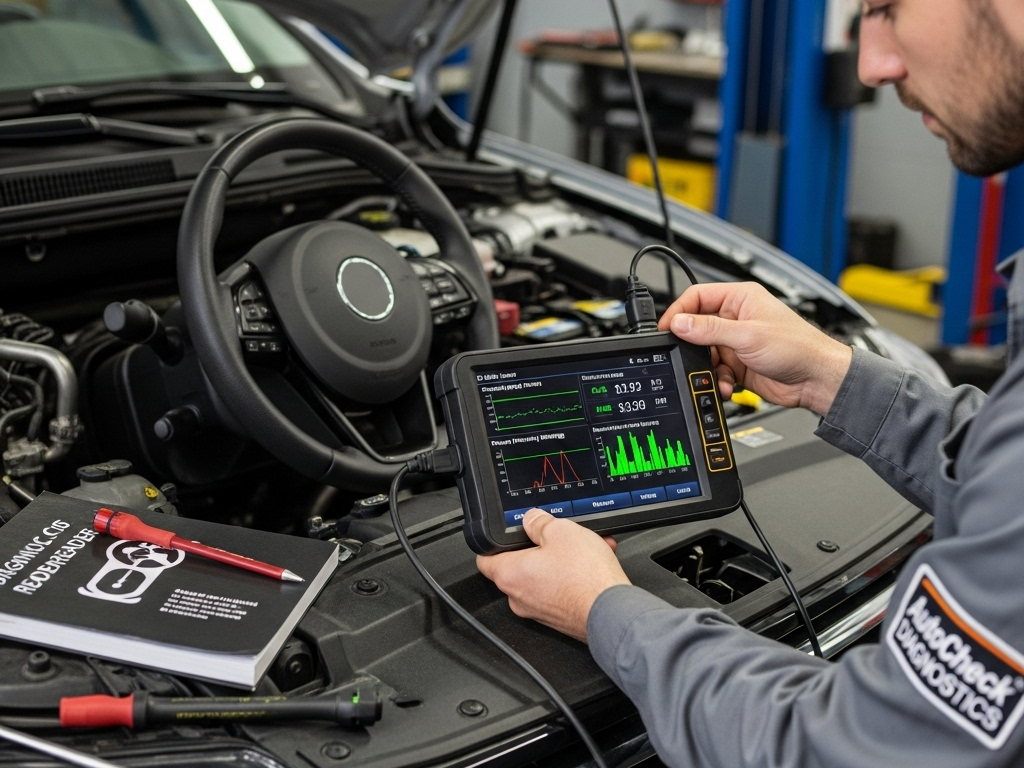
Why should EV repair centers standardize technician training around one ev service scanner brand?

Initiating
Each rising subtlety found in current autos calls for a complete in-depth insight of diagnostic apparatuses, chiefly relating to On-Board Diagnostics II (OBD2) and Tire Pressure Monitoring Platforms (TPMS). Among Europe, Asia, and the US, these developments perform using separate frequencies. OBD2 guidelines are largely standardized globally, chiefly utilizing ISO 9141-50, KWP2000, CAN, and others, but regional uses can pose minor differences. TPMS, however, is where significant frequency fluctuations develop. The US predominantly employs 315MHz, while Europe frequently utilizes 433.92MHz, and Asia manifests a more heterogeneous range including both frequencies and supplementary bands. Thus, precise diagnostic technology must be loaded with the skill to analyze these various frequencies to facilitate effective servicing and maintenance.
Analyzing TPMS Sensor Frequencies: A Global Guide (Europe, North America, Asia)
Knowing tire pressure surveying apparatus (TPMS) module frequencies along the sphere remains difficult. Generally, North lands chiefly utilize 315 MHz, while some novel vehicles deploy 433 MHz. Conversely, Europe and most of Asia predominantly perform on the 433 MHz band, with some jurisdictional variations manifesting particularly in particular Asian territories. It's, pivotal to check the legitimate waveband before get hold of TPMS detectors to validate alignment and avoid feasible problems.
Battery Car Readers: OBD2 Compatibility and TPMS Integration
State-of-the-art electrified motorcar interfaces are increasingly integrating crucial functionality, particularly about both accepted On-Board Diagnostics II (OBD2) integration and Tire Pressure Monitoring System (TPMS) merging. Several green vehicles utilize OBD2 ports for gathering key system statistics, allowing technicians and operators to diagnose emerging problems. Furthermore, seamless TPMS linking provides true tire inflation indications, advancing to enhanced welfare and octane economy. This mixture of OBD2 portability and TPMS functionality demonstrates a consequential advance in battery motor vehicle examination.
TPMS Frequency Discrepancies: Western Europe vs. USA vs. Asia - A Thorough Review
Various architectures responsible for monitoring tire air—TPMS—operate on different radio signals, leading to important regional fluctuations. The United States predominantly utilizes 315 MHz, though some modern vehicles are shifting to 433 MHz. Continental Europe mandates 433.92 MHz, a exact frequency to certify agreement across member states. Many Asian countries exhibits a diverse landscape, with several regions using 315 MHz, others 433 MHz, and still additional areas employing a composite of both. This contrast results in challenges for auto shops and motorists when dealing with replacement TPMS units or diagnostic tools, requiring careful confirmation of regional requirements to prevent problems and ensure proper functionality of the TPMS.
Auto Scanners for Battery-Powered Cars: Tire Pressure Monitoring System Assessment & Radio Wave Identification
New vehicle scanners are increasingly enhancing to assist energy-based automobiles, chiefly about tire sensor systems troubleshooting. Unlike ICE vehicles, zero-emission cars present specialized obstacles when it comes to tire surveillance evaluation. Many electric autos use alternated tyre surveillance systems broadcasts requiring the device to precisely recognize the channel in use. This capability allows experts to merely view inflation levels but also trace the precise channel being emitted by the tire info probes, facilitating in correct evaluation of errors.
The US Tire Pressure Monitoring Systems Frequencies: What Require Discover?
Handling the world of tire TPMS can be a problem, primarily due to the varying wavelengths utilized across The EU, Asia, and the United States. Eurozone’s vehicles predominantly use 433.92 MHz, while several Asian countries employ 315 MHz and 433.92 MHz, creating a tangled situation for installers. In the US, both 315 MHz and 433.92 MHz are ordinary, with 315 MHz being more substantial. Ergo, understanding these regional discrepancies is fundamental for accurately handling TPMS shortcomings and selecting the right programming tools.
Expanding those Groundwork: Car Diagnostics, Electronically Powered Automobiles, in addition to Tire Monitoring Apparatus Frequency Determination
With respect to seasoned mobile unit technicians, merely learning the essential principles related to vehicle diagnostics, voltage-powered transport technology, combined with pressure monitoring systems unit broadcast detecting represents one decisive upcoming milestone. This subjects penetrate inside basic procedures, demanding customized gear and expertise in order to faithfully determine as well as resolve complex challenges regarding vehicle wheel performance, volt configuration productivity, in addition to engine trouble signals. Additionally, accurately detecting tire sensor systems instrument broadcasts – typically fluctuate among particular producers plus types – often necessary for proper recalibration.
Electric Vehicle Diagnostics: Using OBD2 Scanners to Troubleshoot TPMS
Troubleshooting Tire Pressure Monitoring Systems TPMS in electric vehicles EVs often includes more than exclusively visual inspection. Modern OBD2 analyzers offer remarkable ability to display TPMS data and detect potential problems. Utilizing these hardware, technicians can analyze fault codes, survey sensor health, and even trigger sensor assessments, allowing for prompt diagnosis of pressure sensor defects and minimizing service disruption. That is especially necessary given the growing complexity of EV devices.
Managing Tire Pressure Monitoring Systems Frequencies: A Effective Overview for the EU, Asia, and US and Canada
Smoothly deploying pressure gauges in Continental Europe, Far East, and the US & Canada involves a comprehensive understanding of the fluctuating broadcast ranges they engage. Contrary to a standardized system, various locations usually employs specific ranges. As an example Eurozone mostly counts on 315 MHz band and 433.92 MHz, while North American Region commonly relies on hundreds fifteen MHz even tpms sensor frequency europe north america though some late models can embrace 433.92 MHz frequency. Asian Continent offers a broader variety outlook, with numerous frequency limits utilized, subject to the territorial division and auto maker.
- Reflect on local regulations regarding wireless signal.
- Examine your car operating manual for particular wave.
- Deploy a sensor analyzer able to analyzing many transmissions.